
Data centers are the backbone of modern business, housing the critical infrastructure that keeps our digital world running. For data center managers and electrical contractors, uptime isn’t just a goal; it’s a necessity. Even a momentary power disruption can trigger a catastrophic chain reaction, leading to data loss, financial penalties, and reputational damage.
That’s why using redundant power strategies for power whip failures is a best practice and a fundamental requirement for operational resilience. This guide will explore practical redundant power strategies that can fortify your facility against these vulnerabilities, keeping your operations online and your data secure.
Understanding Power Whips and Their Failure Points
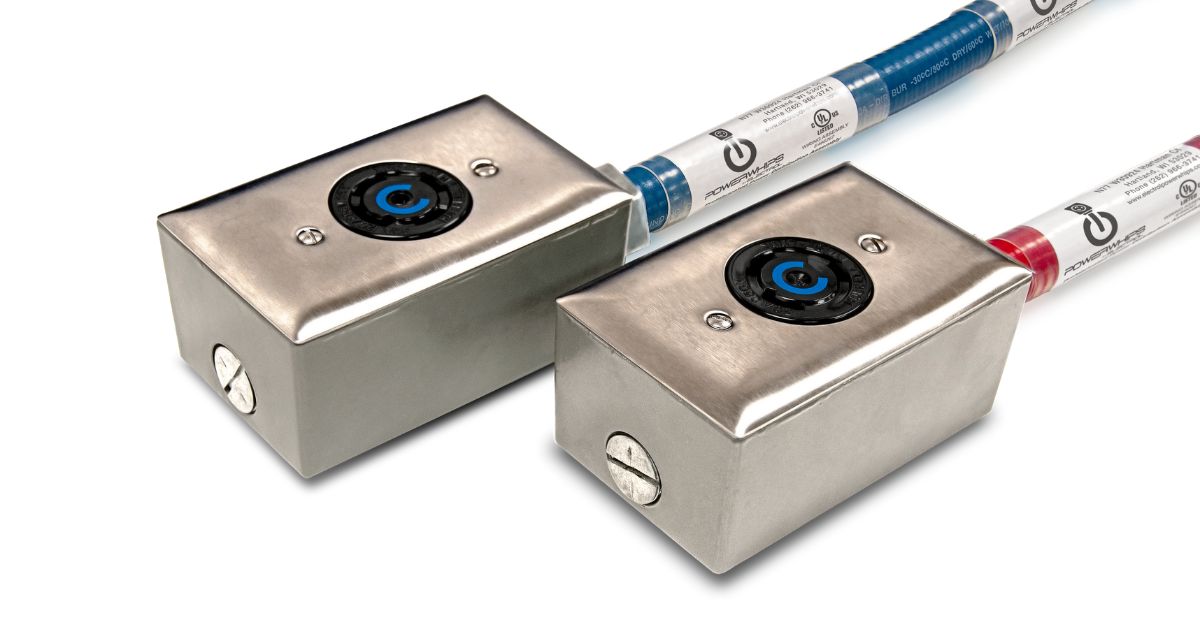
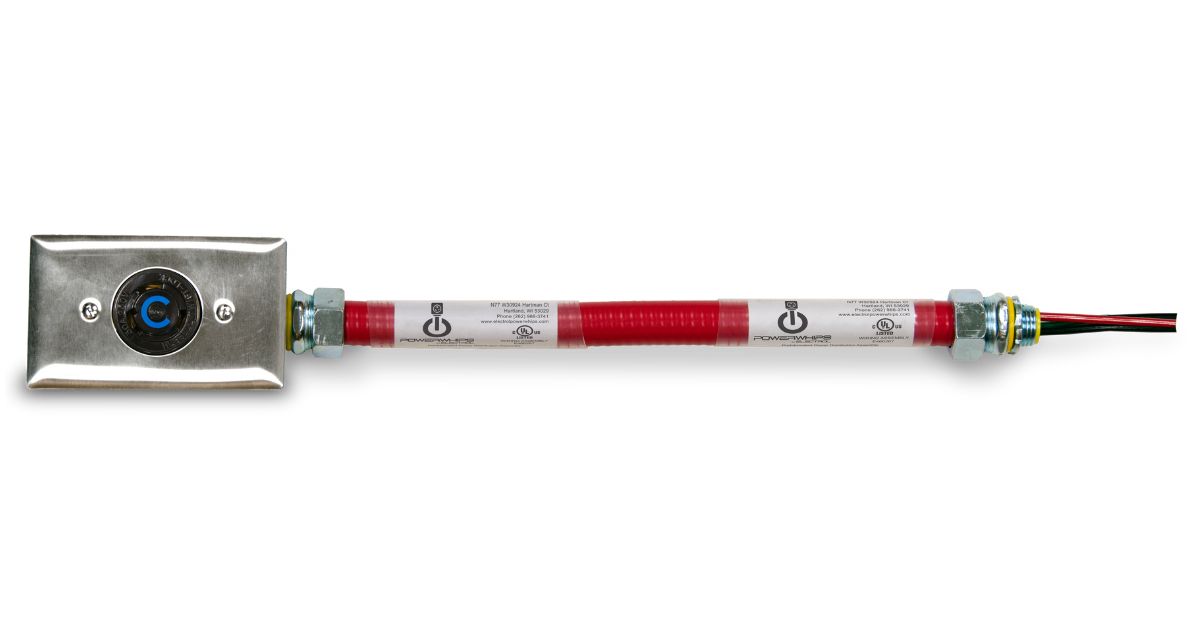
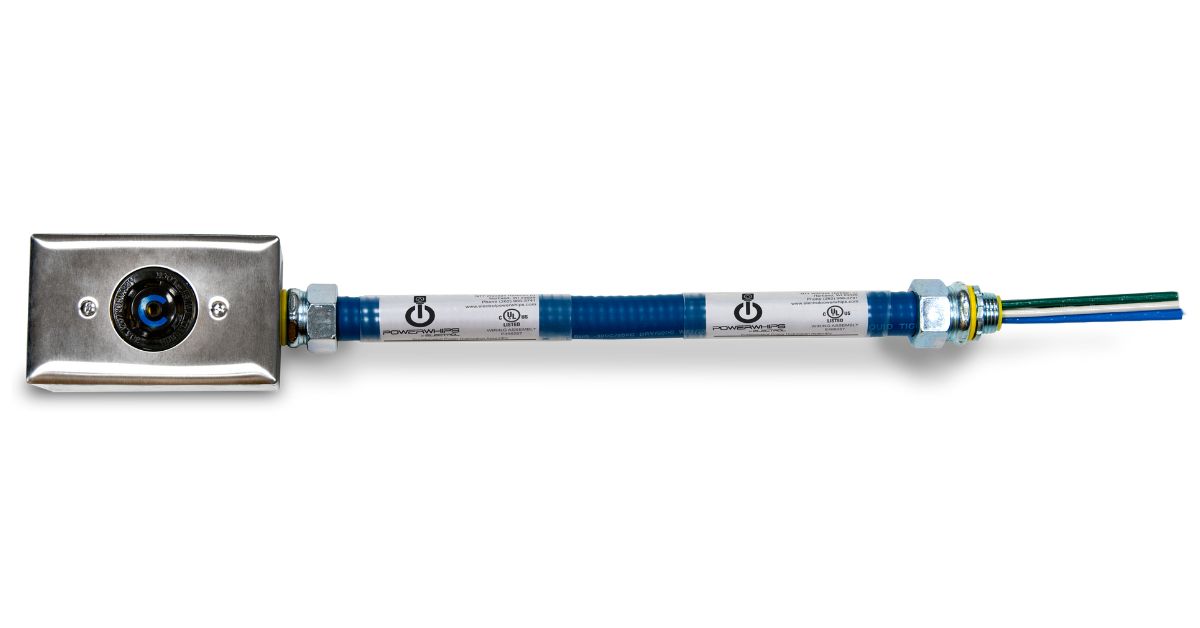
Before designing a resilient power system, it’s helpful to understand what a power whip is and why it might fail. A power whip is essentially the final link in the power chain, connecting the main distribution system to the individual server racks. These flexible conduits contain the conductors that supply electricity to the rack’s power strips or PDUs.
Common Causes of Power Whip Failure
Several factors can compromise the integrity of a power whip, and one of the most frequent culprits is physical damage. Whips located in high-traffic areas under raised floors can be accidentally kicked, crushed by rolling equipment, or bent beyond their tolerance during maintenance. This physical stress can damage the internal conductors or the connection points, creating a high-resistance fault that leads to overheating.
The Impact of Overheating and Loose Connections
Overheating is another serious threat. It can result from overloading the circuit, but more often, it stems from a poor or loose connection at the PDU or the server rack. A loose terminal screw creates electrical resistance, which generates heat.
Over time, this heat can degrade the cable’s insulation and eventually cause a complete failure or even a fire. Regular thermal inspections are a great way to detect these “hot spots” before they escalate into a full-blown outage.
The Foundation of Redundancy: 2N Architecture
The most widely adopted strategy for achieving high availability in data centers is the 2N redundancy model. The “N” in this equation represents the amount of power capacity needed to run the facility. A 2N architecture, therefore, provides double the required capacity by creating two independent, mirrored power distribution systems.
What 2N Redundancy Looks Like
In a 2N setup, every critical component is duplicated. This includes everything from utility feeds and backup generators to uninterruptible power supplies (UPS) and PDUs. Each server rack is then equipped with dual power supplies, with each supply connected to one of the two separate power paths, often labeled A and B.
How 2N Protects Against Whip Failures
This dual-path design is the core defense against a power whip failure. If the power whip on the A side fails for any reason, be it a tripped breaker, a physical cut, or a connector burnout, the server’s second power supply immediately draws all the required power from the B side. The transition is seamless, and the server continues to operate without any interruption. This instant failover prevents a single whip failure from taking down an entire rack of equipment.
Advanced Redundancy: Distributed and Block Redundancy
While 2N architecture provides a robust foundation, some facilities require even higher levels of availability. In these environments, more advanced strategies such as distributed redundancy and block redundancy provide enhanced protection and flexibility.
Exploring Distributed Redundancy (N+1 or N+2)
Distributed redundancy, often configured as N+1 or N+2, adds extra capacity to the system without fully duplicating it. In an N+1 model, for example, a facility might have three UPS systems, even though only two are needed to carry the full load. The third unit serves as a backup that can take over if one of the primary units fails.
This approach can also be applied to power whips. A rack might be powered by three whips (two active, one standby) connected to different PDUs. This provides an additional layer of protection beyond the standard 2N model. It’s a cost-effective way to increase resilience without the expense of a fully mirrored 2N+1 system.
Understanding Block Redundancy
Block redundancy, sometimes called a system-plus-system (S+S) design, takes a modular approach. The data center is divided into independent “blocks,” each with its own complete power and cooling infrastructure. These blocks are isolated from one another, so a catastrophic failure in one block does not affect the others.
This strategy protects against large-scale failures that might overwhelm a traditional 2N system, such as a fire or a major PDU malfunction that impacts an entire power path. By containing the fault within a single block, the rest of the data center remains operational.
Proactive Maintenance and Monitoring
Implementing redundant power architectures is only half the battle. Without diligent maintenance and real-time monitoring, even the most sophisticated systems can fail. A proactive approach is necessary to identify potential issues before they cause an outage.
The Role of Regular Inspections
Electrical contractors and facility managers should conduct regular physical inspections of all power whips. This includes checking for signs of physical damage, such as kinks, abrasions, or crushing. It’s also vital to perform thermal scanning at all connection points to detect hot spots that indicate a loose or deteriorating connection. These simple checks can prevent most whip-related failures.
Leveraging Power Monitoring Systems
Modern data centers should utilize advanced power monitoring systems that provide real-time visibility into the entire electrical infrastructure. These systems can track load levels, power quality, and the status of every PDU and circuit breaker. With detailed monitoring, you can receive alerts about overloads or voltage irregularities, which allows your team to address problems before they cause a failover event or, worse, an outage.
For a reliable data center power whip designed to meet the rigorous demands of your facility, trust Electrol Powerwhips. Our high-quality power distribution solutions are engineered for maximum reliability and performance, ensuring your critical infrastructure remains operational. Contact us today to discuss your specific requirements and let us assist you with reliable power solutions.
Fortify Your Facility Today
Protecting a data center from downtime requires a multi-layered approach. It starts with a solid, redundant architecture, such as the 2N model, and may extend to more complex strategies for mission-critical applications. But technology alone is not enough. Success depends on a commitment to proactive maintenance, regular inspections, and continuous monitoring of the entire power chain.
By using redundant power strategies for power whip failures, data center managers and electrical contractors can build a resilient infrastructure that stands strong against unexpected events. This diligence ensures service continuity, protects valuable data, and upholds the trust placed in your facility.