
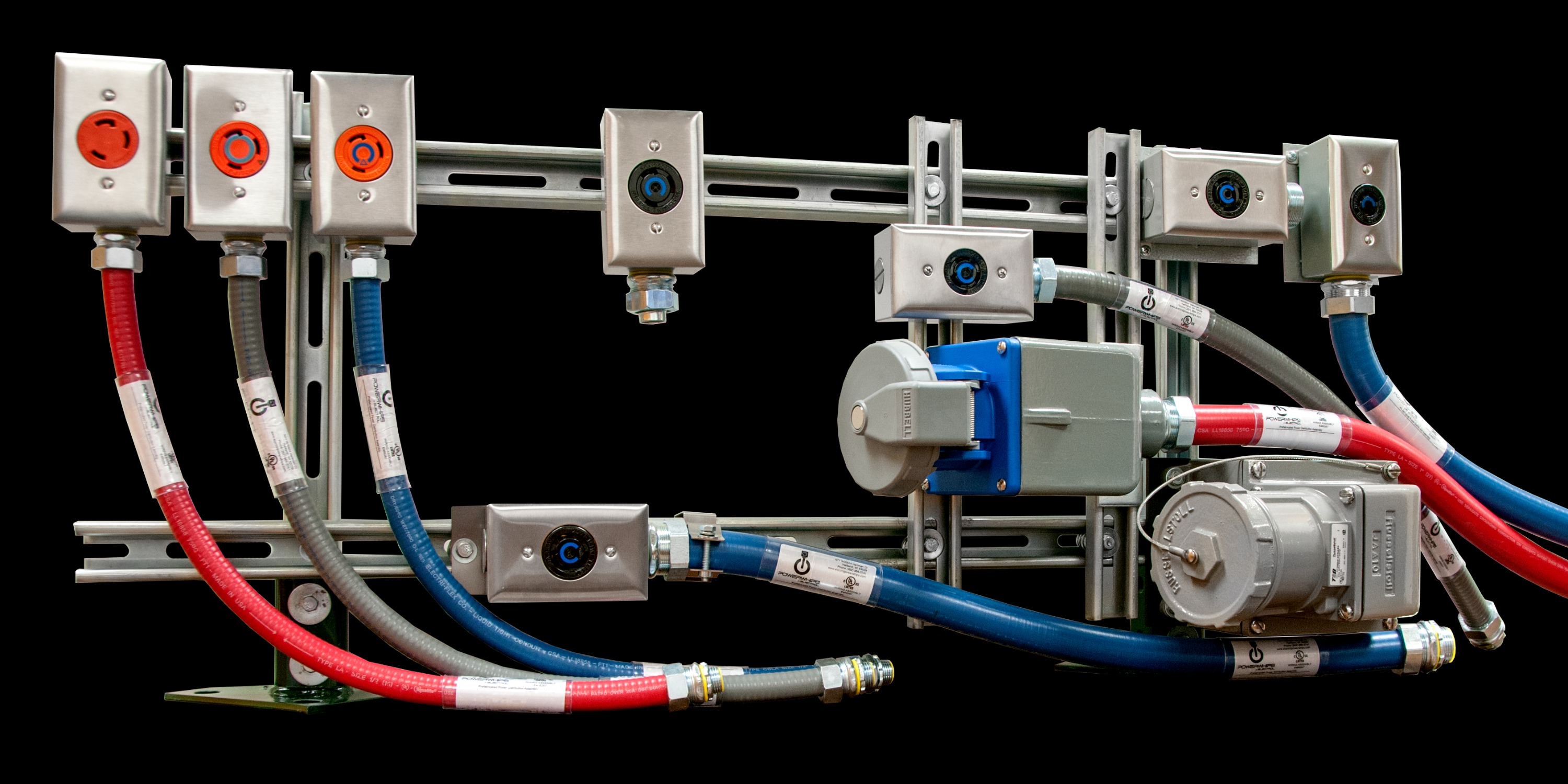
Higher-density IT equipment changes how data center teams plan rack-level power distribution. While a PDU offers substantial total capacity, every connected device still relies on an appropriately rated outlet and cable assembly.
IEC 60320 C19/C20 connections are particularly useful for integrating with equipment like high-power PDUs that require more current than the familiar C13/C14 family supports. They provide a standardized connection method for higher-demand equipment while giving PDU designers flexibility across mixed rack loads.
Why C19/C20 Fits Higher-Power PDU Applications
C19/C20 couplers occupy the higher-current end of the commonly used IEC 60320 data center connection families. Under international ratings, C19 connectors and C20 inlets support up to 16 amps at 250 VAC. North American-approved versions are commonly rated up to 20 amps at 250 VAC.
This increased current capacity makes C19/C20 suitable for high-draw servers and other IT equipment. Consequently, modern high-power PDUs often include C19 outlets in addition to lower-current C13 outlets.
This configuration allows the PDU to support various equipment classes without requiring all devices to use the same connector type, giving data center teams greater control over outlet allocation as rack power density increases.
Understand the C19 and C20 Relationship
The C19 and C20 form a mating pair within the IEC 60320 system. The C19 serves as the connector, while the C20 is the corresponding inlet. Interpower identifies the same relationship in its technical documentation for IEC 60320 equipment.
A server or device with a C20 inlet accepts a C19 cord connector. Conversely, a C20 plug on a power cord connects to a compatible C19 PDU outlet. C20 connections may also be used at a PDU input, where a detachable power cord with a C19 connector supplies power through the PDU’s C20 inlet.
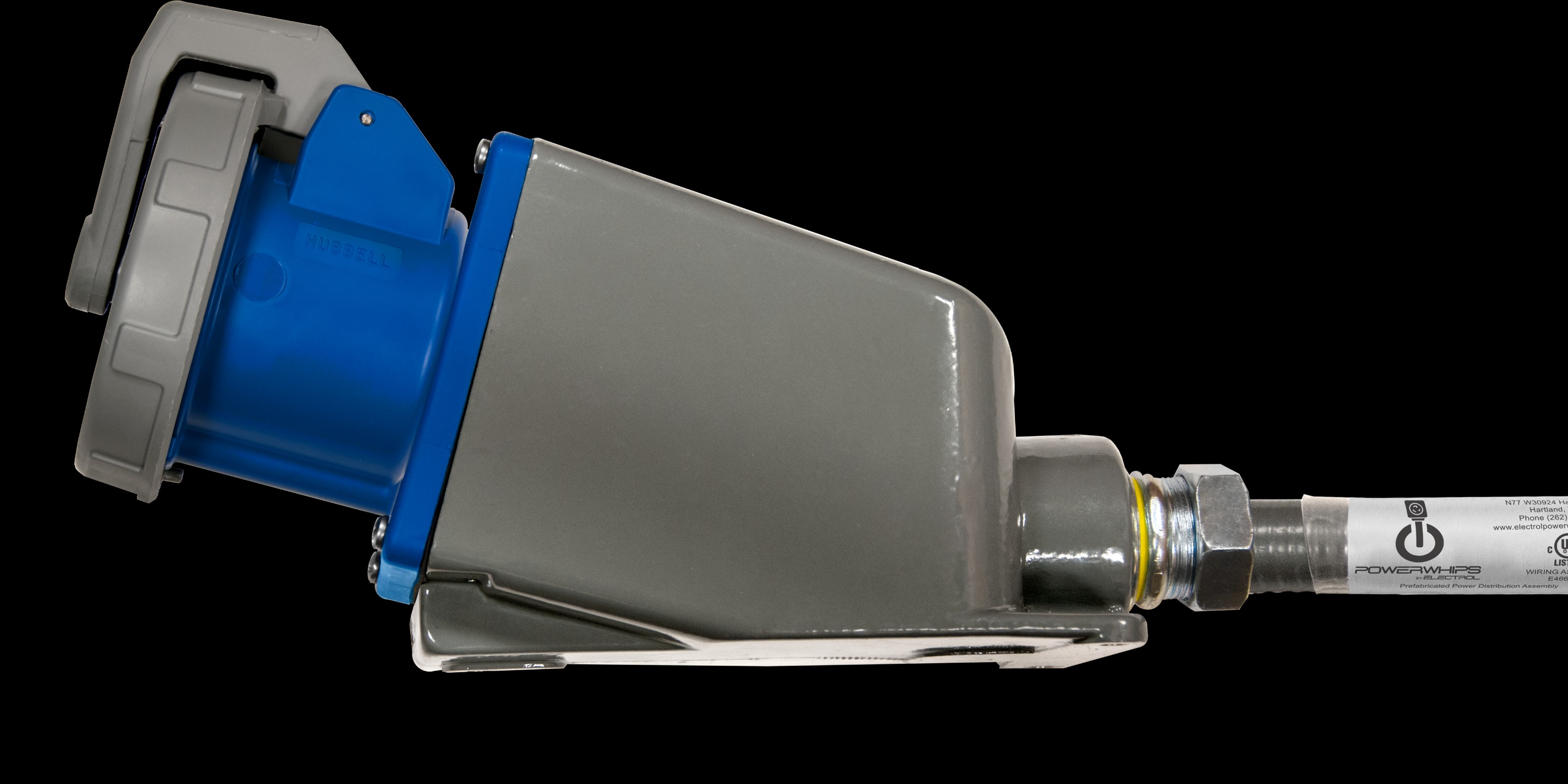
Get the IEC Ratings Right
For C19/C20 connections, the international rating allows 16 amps at 250 VAC. In contrast, products with the appropriate North American approvals qualify for 20-amp service at 250 VAC.
The connector shape alone does not determine a cable’s full rating. Always verify the markings and approvals on the actual assembly.
Before specifying a C19/C20 data center cable, confirm:
- PDU output voltage
- Outlet current rating
- PDU branch-circuit limits
- Connected equipment requirements
- Cable assembly current rating
- Required product approvals
- Connector orientation
- Finished cable length
By following this process, teams prioritize electrical design considerations over connector selection.
Separate Total PDU Capacity from C19 Outlet Capacity
High-power PDU specifications often highlight total kW capacity, which reflects the PDU’s overall capability under specified conditions. However, it is important to note that individual C19 outlets do not supply the PDU’s full rated power.
This distinction grows increasingly important as rack densities rise. Although a high-capacity PDU supports multiple demanding loads, it still limits individual connections.
Match C19 Outlets to Equipment and Branch Capacity
A C19 outlet provides a higher-capacity connection without requiring all rack devices to use the same connector type. Therefore, it is essential to let equipment requirements guide connector selection. A device with a C20 inlet naturally requires a mating C19 connector.
The selected PDU outlet must support that equipment within the PDU’s published electrical limits. In dense deployments, multiple outlets may share the same protected PDU circuit. An unused C19 outlet does not guarantee available electrical capacity.
Watch the Branch
An available receptacle shows where a connector can fit, but does not indicate remaining branch capacity. While intelligent PDUs provide better visibility into electrical loading, simpler units require teams to determine expected loads during design and commissioning. The C19/C20 cable does not increase branch capacity; it simply connects equipment to the PDU within established electrical limits.
Use C20 PDU Inputs Carefully
C20 connections also serve as detachable inputs on rack PDUs, not just server inputs. In practice, detachable inputs simplify deployment by eliminating the need for a permanently attached source cable. You can configure the upstream cable to match the available source connection while the PDU remains unchanged.
However, the input sets a clear limit. Even if multiple downstream outlets are present, they do not increase the electrical capacity available through a 16A C20 input. Thus, effective PDU planning considers the entire power path.
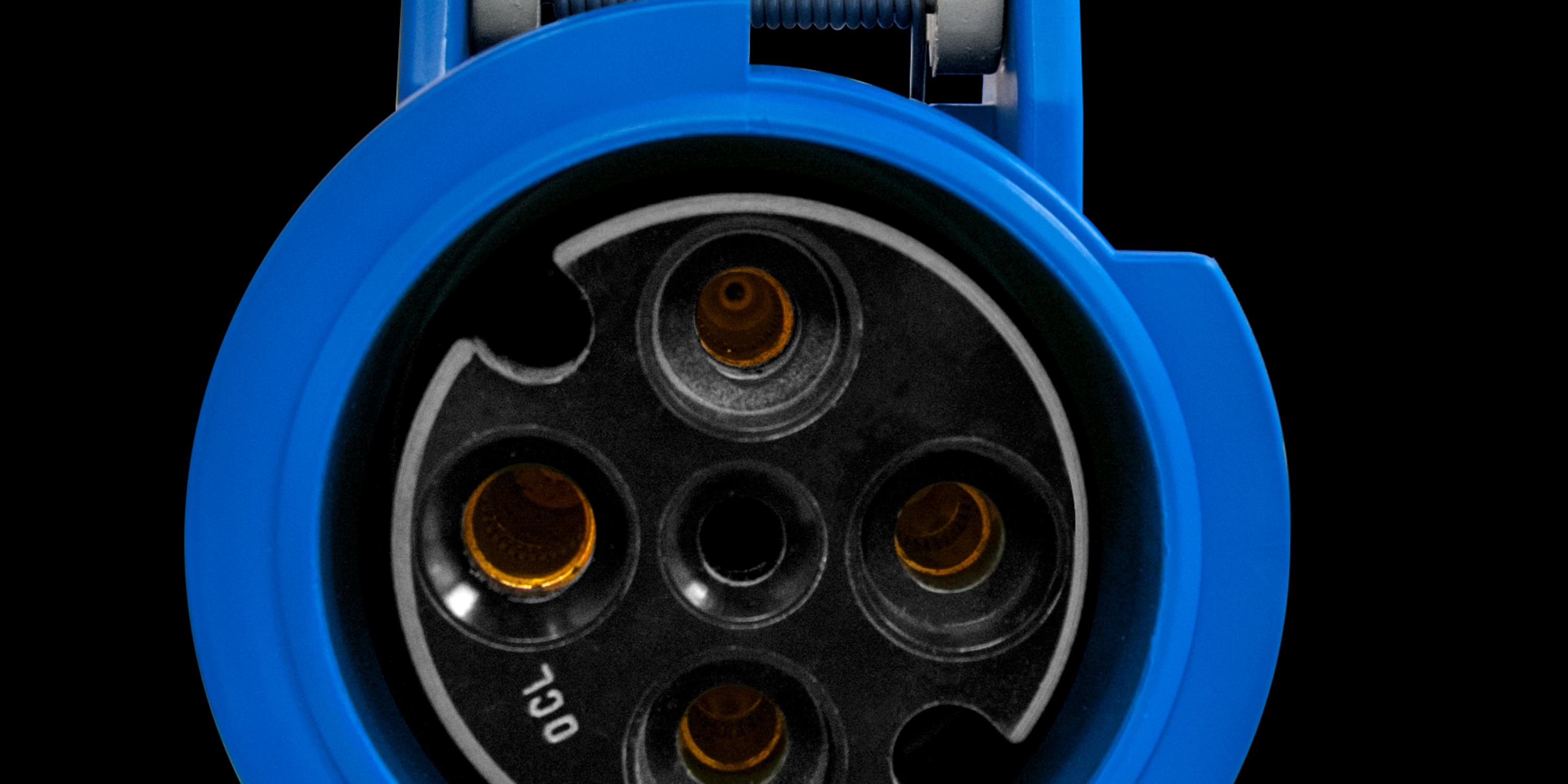
Protect Connection Retention and Cable Routing
Correct electrical ratings do not eliminate mechanical concerns. For example, a C19 connector must seat completely in its mating connection, and cable routing should avoid leaving continuous pulling force on the connector. A cable that barely reaches the equipment can remain under tension after installation, while excessive slack can consume valuable rack space.
Selecting the right cable length allows the assembly to follow the intended route without stretching the connection or creating unnecessary cable buildup. Additionally, some PDU manufacturers use retention systems to reduce accidental disconnection, and locking IEC cords offer another option where compatible equipment supports them.
Retention features must be compatible with the specific PDU and cable system. Do not assume a proprietary locking mechanism will engage with all standard C19 or C20 connections.
Standardize C19/C20 Cables Without Oversimplifying
Standardization simplifies management of high-density deployments. As a result, approved C19/C20 cable configurations allow procurement teams to reuse established connections instead of specifying new ones for each installation.
Cable length is a practical aspect for standardization. To streamline operations, facilities can define approved lengths based on common PDU-to-equipment routes. Electrical specifications should be clear for each approved assembly, enabling teams to reorder the same configuration as needed.
Standardization should not compromise proper installation. Do not use a cable intended for one rack in a different layout solely due to existing inventory. The best approach combines consistent cable specifications with flexibility for actual PDU layouts.
Build C19/C20 Into the Complete PDU Strategy
Effective IEC 60320 C19/C20 integration with high-power PDUs requires more than selecting a higher-current IEC connection. Instead, equipment determines the connection requirement, and the PDU must offer a suitable outlet with adequate capacity.
Once these conditions are met, a properly specified C19/C20 cable completes the connection, resulting in a more efficient solution for higher-demand IT equipment.
Electrol PowerWhips offers IEC 60309 power cords for demanding PDU applications. As rack power requirements grow, selecting the appropriate upstream connection ensures a reliable path to the PDU. A properly specified cord also streamlines deployment by meeting the installation’s electrical requirements from the outset. Contact Electrol PowerWhips today, and let us discuss a cable solution tailored to your PDU needs.