
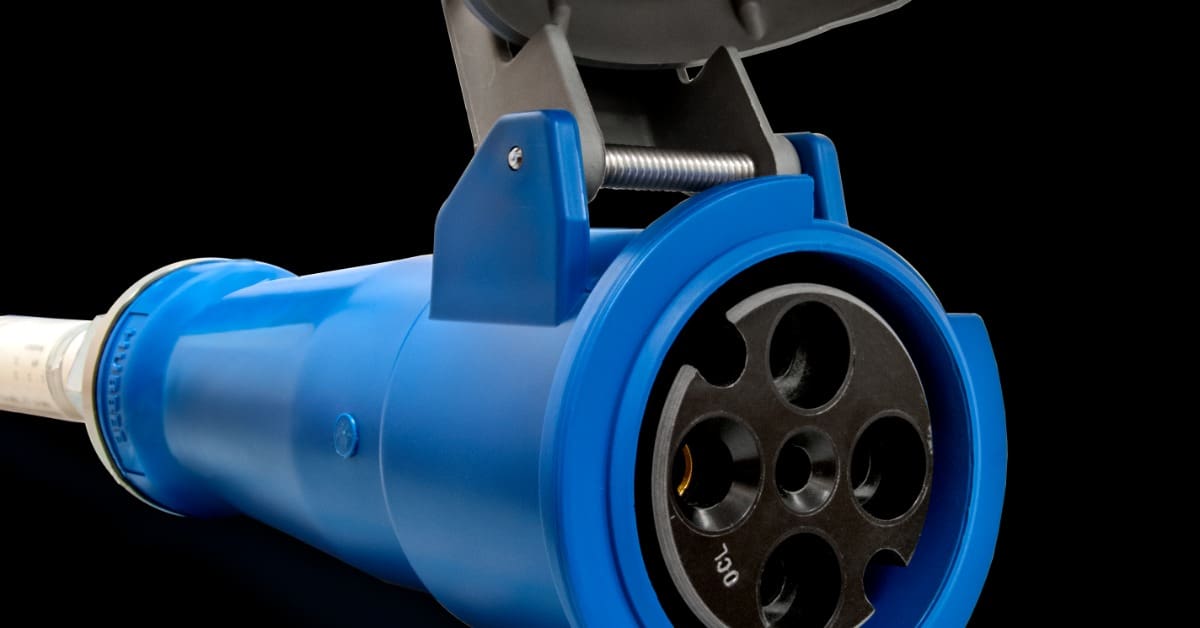
Dense data center layouts leave very little room for careless cable routing. A PDU power cable needs to leave a distribution point and reach its connection without placing excessive stress on the assembly. When designers apply power whip bend radius specifications for tight spaces, they need to work from the cable construction rather than force the cord into whatever clearance remains.
Bend radius becomes especially important as power density increases. Larger conductors usually produce thicker cable assemblies, which naturally need more room to change direction.
Understand What Bend Radius Actually Measures
Bend radius describes how tightly a cable can curve without exceeding its intended mechanical limits. The measurement follows the radius of the cable’s curved path rather than the width of the entire turn, which becomes important when teams evaluate narrow pathways behind PDUs or beside rack rows.
A minimum bend radius represents the smallest acceptable curve for the specific cable construction. It should not become the default target for every turn. Giving the cable more room generally makes installation easier and reduces mechanical stress on the assembly.
Outside Diameter Drives Space Requirements
Cable outside diameter gives designers an immediate indication of how much space a power whip will consume. A heavier assembly does not conform to a tight pathway as easily as a smaller cord. Higher-current PDU connections therefore demand more generous routing space.
Outside diameter is crucial when a manufacturer expresses bend radius as a multiple of cable diameter. The calculation must use the dimensions of the selected product. Substituting the dimensions from another cable can produce a route that looks workable on paper but becomes too tight in the field.
There Is No Universal Bend Radius for Every Power Whip
A single bend-radius number cannot accurately describe every PDU power cable. Power whips come in different conductor sizes and cable constructions. Connector requirements also vary by application. Those differences change how the finished assembly behaves when routed.
Some data center power assemblies use highly flexible portable cord constructions such as SOOW. Other cable products use different jacket compounds or internal designs. Each manufacturer qualifies its cable around its own construction.
That makes the product documentation the correct starting point. A contractor should not carry a bend-radius value from one power cable to another simply because both serve PDUs. The specification should match the cable installed.
Give the Cable Room Behind the Connector
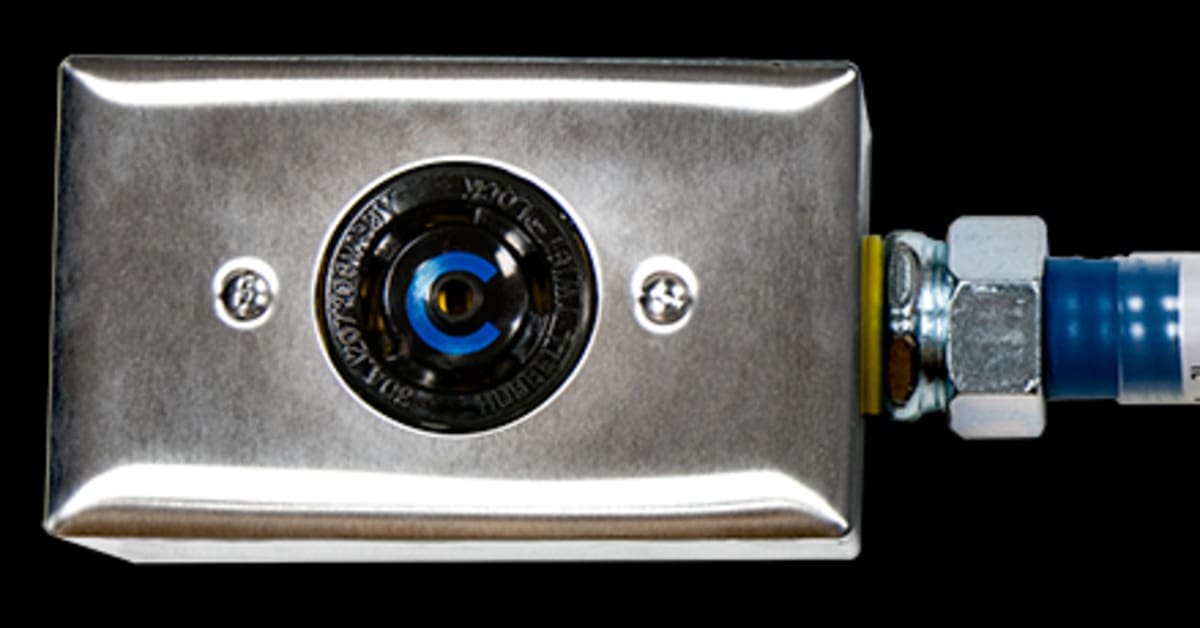
The first few inches behind the connector deserve special attention. A tight equipment layout can tempt installers to turn the cable immediately after it leaves the connector body. That practice concentrates the bend where the assembly transitions into its strain-relief system.
Strain relief prevents pulling force on the cable from transferring directly into the electrical termination. OSHA requires flexible cords to connect to devices in a manner that prevents pull from reaching joints or terminal screws.
Forcing a PDU power cable sharply to one side can work against that protection. The connector should leave enough room for the cord to exit naturally before the route changes direction.
Keep the Bend Away From the Termination
A strain-relief transition should not act as a hinge. Moving the primary bend farther down the cable spreads the curve across a larger area. The assembly can then change direction without concentrating mechanical stress at the connector.
This also helps during service. A technician who needs to disconnect the power cable has room to handle the connector instead of fighting a tightly loaded cord.
Account for the Entire Bend Envelope
A common planning error involves checking only whether the cable physically fits between two objects. The more useful question asks whether the cable can make the required turn within that space.
A 90-degree direction change needs a curved path. The cable cannot occupy the same geometry as a sharply bent line on a drawing. Its bend radius creates a larger routing envelope around the corner.
This becomes especially important behind rack-level distribution equipment, where clearance can disappear quickly. A pathway may offer enough width for the straight cable while leaving too little space for the actual turn.
Avoid Routing Pressure Against Hard Edges
Tight spaces often place cables near cabinet edges or structural supports. The cable jacket should not rely on those surfaces to hold a bend in position. Continuous pressure at one point can create mechanical wear over time.
A cable that presses firmly against a metal edge needs another route or appropriate protection. The bend should form naturally, not because an obstruction forces the jacket into shape. This becomes even more important when technicians regularly move nearby equipment.
Look closely at any location where the whip changes direction. Those areas deserve enough clearance to prevent continuous contact with an abrasive surface.
Measure the Route Before Selecting Whip Length
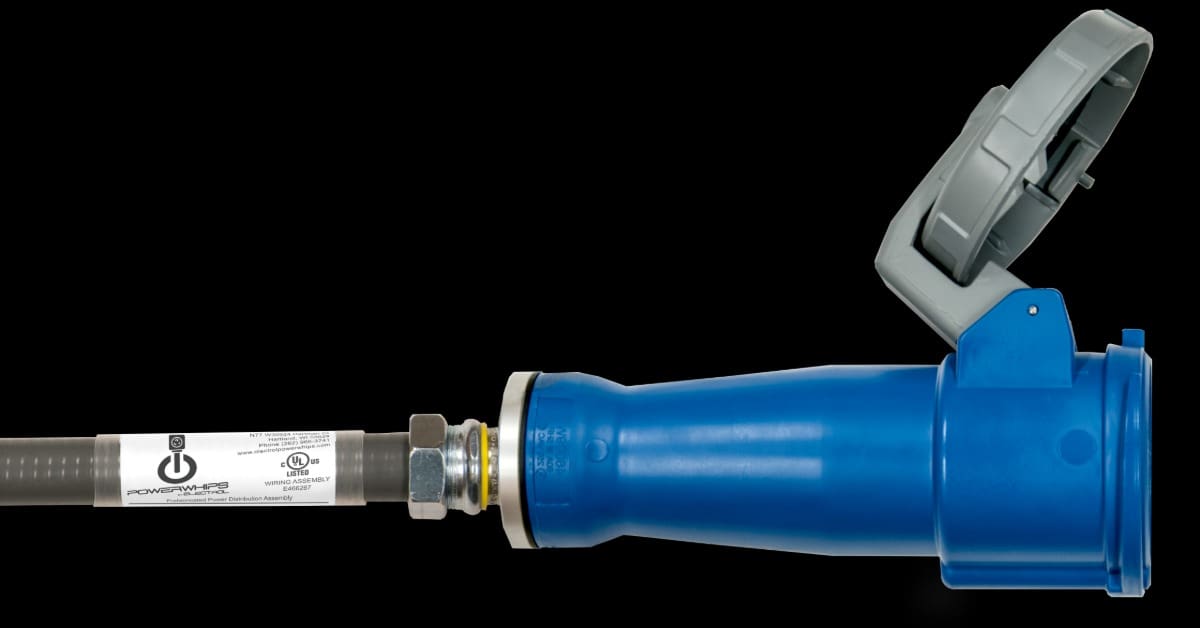
The correct bend radius and cable length work together. An assembly that is too short can pull a bend tighter than intended. The installer may have no choice but to stretch the cable across the available route.
Excessive length creates a different challenge. Large loops consume valuable space and make cable management more difficult. Someone may eventually compress that slack into a narrow area just to keep it out of the way.
Before ordering a PDU power cable for a confined route, document:
- Actual connection-to-connection cable path
- Cable outside diameter
- Published minimum bend radius
- Clearance behind each connector
- Space available through each turn
- Expected mounting position
- Required service access
- Any edge or pinch-point exposure
Taking these measurements before procurement gives the finished assembly a better chance of fitting naturally. It also reduces field modifications after equipment arrives.
Recognize Signs of an Overly Tight Bend
Cable condition can reveal when a route needs improvement. A power whip should maintain a smooth profile through the curve. Visible distortion means the cable is no longer following a natural path.
The cross-section should also not noticeably collapse around the turn. A jacket that remains heavily compressed against an obstruction also signals poor routing. Kinking requires immediate evaluation, not simply pushing the cable back into position.
If the cable consistently pulls sideways on the termination, the bend probably begins too soon. Repositioning the route can remove that loading.
Use Bend Radius To Improve PDU Power Cable Planning
Data center cable routing works best when bend radius is part of the conversation before the power whip reaches the site. Equipment placement gives designers the first opportunity to establish enough clearance. Cable selection then determines how much room the final assembly actually needs.
Following power whip bend radius specifications for tight spaces does more than protect the cable from an obviously sharp bend. It supports a cleaner path from the power distribution point toward connected data center equipment. The result is an installation that technicians can route without forcing the assembly into place.
Electrol Powerwhips offers Powerwhips designed around your application and routing requirements. In tight data center spaces, the right cable assembly can simplify installation while reducing unnecessary strain near connection points. Contact Electrol Powerwhips to discuss solutions built to support dependable power distribution.